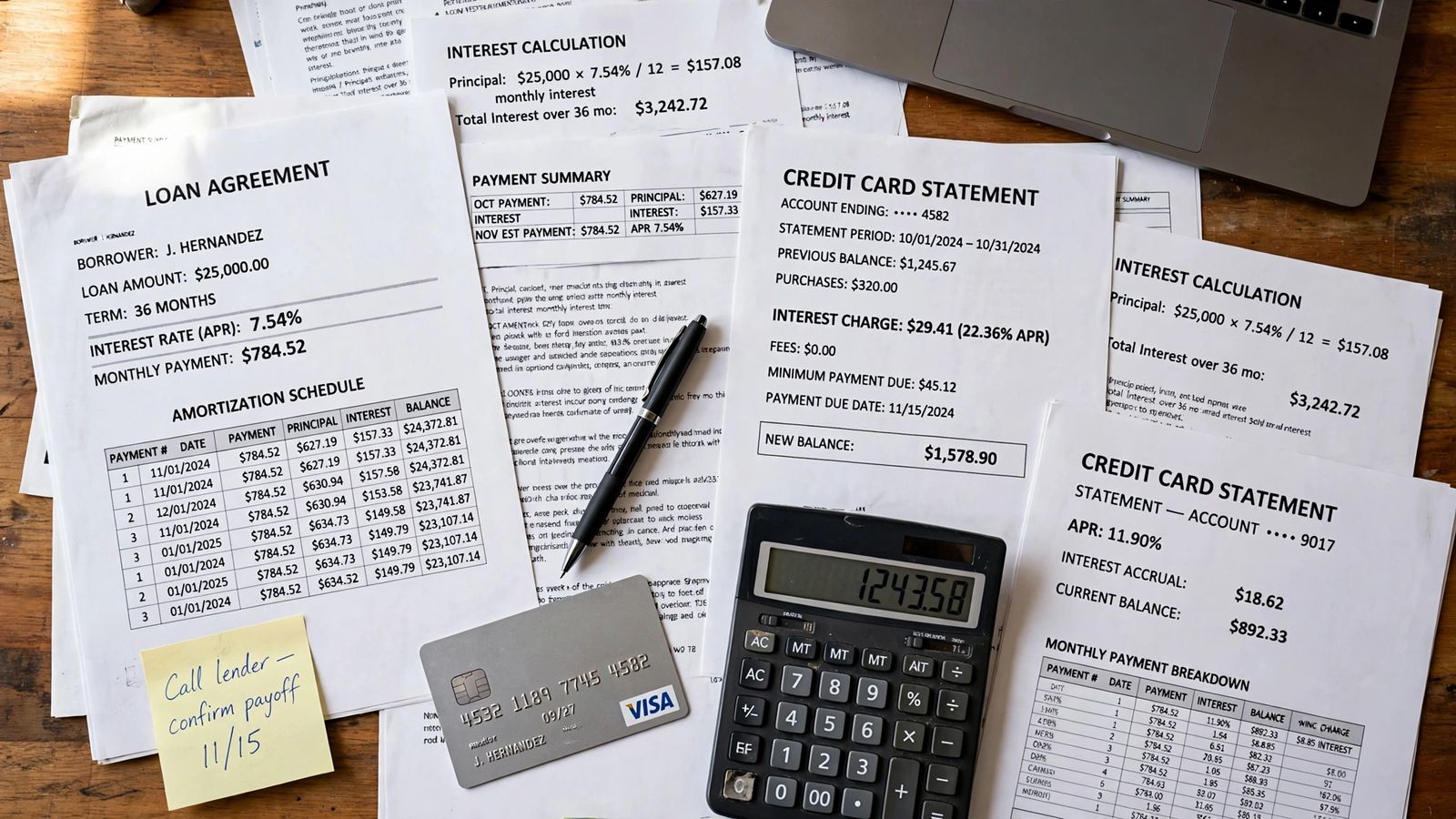
A good APR is one that sits below the current average for that specific type of credit — because “good” is never a single number. For credit cards, the benchmark to beat is 22.36%: that is the average rate on accounts charged interest in August 2026, from the Federal Reserve’s G.19 consumer credit release (released 6 November 2026). For a 60-month new-car loan at a bank, the average to beat is 7.54%, and for a 24-month personal loan it is 11.90% — same release, same month. Beat your product’s average and your rate is good for the market as a whole; beat the average for your credit tier and it is good for you. This page gives you both bars, product by product, with the source and date on every number. If you first need the mechanics — how APR differs from the interest rate — start with what APR is; here we assume that and answer only the “good” question.
One warning before the tables: there is no official “good APR” scale — no regulator stamps a rate good or bad. Every verdict below is a comparison, your offer against a dated, sourced average, and averages move: a rate that is good in November 2026 may be ordinary by next spring, which is why each figure here carries its date.
The three bars every offer has to clear
Whatever you are borrowing for, judge an offer against three bars, in this order:
- The product average. Is it below the current average for this exact product and term? Averages for different products are not interchangeable — a personal-loan rate on a credit card would be remarkable, and a credit-card rate on a mortgage would be a scandal.
- Your tier’s average. Lenders price from your credit profile, so the fair comparison is with borrowers like you. The spread between tiers is wide — on cards, the Consumer Financial Protection Bureau (CFPB) found a gap of roughly six points between the average rate paid by the strongest and weakest score tiers in its most recent market report — so “below average overall” can still be a poor deal for an excellent borrower, and an above-average rate can be a good outcome for someone rebuilding.
- The total cost. APR compares lenders for the same loan; it does not tell you whether the loan itself is cheap. A lower APR over a much longer term can cost more in total than a higher APR repaid quickly — check the total of payments too.
What is a good APR for a credit card?
Start with the two averages the Federal Reserve publishes, because the two are routinely mixed up. In August 2026 (G.19, released 6 November 2026), the average rate across all credit card accounts was 21.19%, while the average on accounts assessed interest — the people who actually carried a balance and paid — was 22.36%. If you carry a balance, 22.36% is your bar: it describes borrowers in your position. The all-accounts figure is pulled down by cardholders who pay in full and are charged nothing.
The CFPB’s Consumer Credit Card Market Report (December 2025), covering 2024 data, shows why the tier matters more than the headline: the average APR that year reached 25.2% on general-purpose cards and 31.3% on private label (store) cards, and the average on new general-purpose accounts was 27.5% — new accounts are priced higher than the book people already hold, so the offer in front of you will usually look worse than the averages above.
The table below translates the two primary anchors — the Fed’s August 2026 averages and the CFPB’s tier pattern — into practical bands. The tier bands are estimates (Mivlan synthesis, November 2026), not published statistics: no primary source publishes a current APR for each score tier, so treat the bands as a guide to what “good for your tier” means, and the two Fed averages above as the hard benchmarks.
| Credit tier (score) | Typical card APRs you may be offered (estimate) | A good APR for this tier |
|---|---|---|
| Excellent (750+) | About 17%–22% | Below 20% — and below 18% is strong |
| Good (670–749) | About 21%–26% | Below the 22.36% assessed-interest average |
| Fair (580–669) | About 26%–30% | Below about 26% |
| Poor / rebuilding (under 580) | About 28%–36%, often secured or store cards | Below 28% — or any card at the 18% credit-union ceiling |
Two fixed points help you sanity-check any offer. First, federal credit unions cannot charge more than 18% on most loans, credit cards included: the National Credit Union Administration extended its 18% ceiling in February 2026 through 10 September 2027. An 18% card is not a bargain for an excellent borrower, but for fair or poor credit it beats almost everything else on the market — which is why the ceiling is such a useful reference. Second, the margin test: most card APRs are the prime rate plus a fixed margin. The Federal Reserve’s H.15 release put the bank prime rate at 7.00% in November 2026, so a 22.36% APR is roughly prime + 15.4 points. When you compare two card offers, compare the margins — the prime part is identical for everyone, and the margin is the price of you. If you are unsure which tier you are in, what is a good credit score maps the score ranges lenders use.
And the honest footnote: pay in full every month and your purchase APR costs you nothing — a rewards card at 26% can beat a plain card at 19%. APR deserves your attention only when you carry a balance, or might.
What is a good APR for a car loan?
For auto loans the G.19 release (August 2026, released 6 November 2026) gives bank averages by term: 7.54% on 60-month new-car loans and 7.17% on 72-month new-car loans. Finance companies — dealer- and manufacturer-linked lenders — averaged about 6.3% on new-car loans in the most recent quarter they reported in the same release (Q2 2026): captive finance arms sometimes price below banks to move cars, usually on specific models and short terms.
So for a new car: below 7.54% on a 60-month bank loan is good; below about 6.5% is strong (estimate, November 2026, judged against the two G.19 averages above). At 8%–9% or higher with good credit, get a competing quote — ideally a pre-approval from your own bank or credit union before you visit the dealer.
Used cars cost more to finance than new ones, but the Fed does not publish a separate used-car average in G.19, so any precise figure would be an invention. As an estimate (November 2026), typical used-car offers run roughly one to three points above the new-car average for the same tier, which makes below about 8.5%–9% a good used-car APR with good credit, and anything in single digits respectable for fair credit. And beware the term: a 72- or 84-month loan at a “good” APR on a used car can leave you owing more than the car is worth.
What is a good APR on a personal loan?
The G.19 benchmark for personal loans is 11.90% — the average rate on 24-month personal loans at commercial banks in August 2026 (released 6 November 2026). Personal loans vary more by tier than almost any other product, because they are unsecured: the lender has nothing to repossess, so your credit profile is the security. That is why the same product can legitimately be offered at 7% to one borrower and 30%+ to another.
Against the 11.90% average: below 10% is good and below 8% is excellent for a bank personal loan (estimate, November 2026, judged against the G.19 average); around 12% is ordinary; and above 20% should make you pause, because at that level a personal loan resembles credit-card pricing without a card’s flexibility. For fair or poor credit, offers in the high teens are common, and the comparison that matters is against your alternative: consolidating card debt that averages 22.36% at 17% still cuts your rate by five points. Judge the loan against what it replaces, not just against the average.
One more check: personal loans often carry an origination fee, which sits inside the APR but reduces the cash you actually receive, so two offers at the same APR can deliver different amounts. Compare the amount funded and the total of payments — and remember how to build credit is the long game here: the cheapest borrowing is the borrowing your future score makes possible.
What is a good APR on a mortgage?
Mortgages need a different benchmark, because the cleanest national series measures the interest rate, not the APR. Freddie Mac’s Primary Mortgage Market Survey put the average 30-year fixed rate at 7.11% and the 15-year fixed at 6.45% for the week ending 12 November 2026. Read the survey’s fine print before using it as your bar: it covers conventional, conforming purchase loans for borrowers with 20% down and excellent credit. It is the top tier’s average, not everyone’s.
Your mortgage APR will sit above your interest rate, because the APR folds in points and certain lender charges. The CFPB’s explanation of mortgage rate versus APR makes the practical point: the APR is the number built for comparing lenders, and it appears in the Comparisons section of your Loan Estimate for exactly that purpose. In practice the gap is usually a few tenths of a point (estimate, November 2026).
So a good mortgage APR in November 2026, for a strong borrower on a 30-year fixed loan, is an APR in the low 7s, close to the 7.11% survey rate — and the real test is comparative: get at least three Loan Estimates for the same loan on the same day and compare their APRs and lender fees side by side. With weaker credit or a small down payment, rates above the survey average are normal, so judge your quotes against each other, not against a headline built for 20%-down borrowers. A quarter-point here is worth far more than on a short loan, because you pay it for 30 years.
How to get a better APR
- Fix the tier, not the negotiation. Almost every point of APR difference above is credit-tier difference. Paying on time and keeping card balances well below their limits are the habits that move a score — and therefore your margin — the most. Even products that feel separate feed the same file: does buy now, pay later affect your credit score is worth knowing before small instalments shape a big rate.
- Shop inside one product and term. Get quotes for the same amount, same term, same week. APR comparisons across different terms mislead, and quotes gathered weeks apart bake in market moves that have nothing to do with you.
- Check a federal credit union. The 18% ceiling makes credit unions the one lender class with a legal maximum on cards and most loans — for fair or rebuilding credit, that cap can beat every bank offer available to you.
- Ask your existing card issuer. A short call asking for a lower APR costs nothing; issuers often trim a margin rather than lose a balance. The worst answer is the rate you already have.
- Mind the clock on 0% offers. A 0% introductory APR is the best rate on this page while it lasts — and an ordinary or penalty rate the month after. It counts as “good” only with a payoff plan that clears the balance inside the window.
Frequently asked questions
What is a good APR for a first credit card? Expect offers at or above the averages above — a thin credit file prices like a risky one. For a first card, “good” means a card you can get without paying for the privilege: no annual fee, ideally from a credit union (where the 18% ceiling applies) or a secured card with a clear upgrade path. Pay in full and the APR never touches you while your file thickens.
Is 24.99% a good APR? On a credit card, no — it is above the 22.36% average rate paid by balance-carriers in August 2026, so it is an expensive card for anyone with good credit, though it is unremarkable for fair credit or a store card (store cards averaged 31.3% in the CFPB’s 2024 data). On any other product — auto, personal, mortgage — 24.99% would be far outside the normal range.
What is a good APR for a car with a 700 credit score? A score of 700 sits in the “good” tier, so judge offers against the bank average: below the G.19 figure of 7.54% for a 60-month new-car loan (August 2026) is good, and a credit-union or manufacturer offer in the 6s is strong. For a used car, single digits below about 9% is a good outcome at this tier (estimate, November 2026).
Does a good APR matter if I never carry a balance? On a credit card, no — pay in full by the due date and the purchase APR is never applied. On loans, it always matters: interest is charged from day one, so the APR is a real cost on every payment.
Why is my offered APR higher than the averages here? Because averages describe the middle of the market, and offers are priced for one person: you. A lower score tier, a longer term, a smaller down payment, or a new account (new card accounts averaged 27.5% in the CFPB’s 2024 data) all push an offer above the headline. The averages tell you how far above — and whether shopping elsewhere is likely to help.
This article is general education about US consumer credit benchmarks, based on the Federal Reserve, CFPB, Freddie Mac and NCUA sources linked above. Rate figures are the August 2026 readings from the Federal Reserve’s G.19 release of 6 November 2026, the CFPB’s December 2025 market report (2024 data), and Freddie Mac’s survey for the week ending 12 November 2026; tier bands marked as estimates are Mivlan’s synthesis of those sources, November 2026. Rates will have moved since. It is not personal financial advice; your own disclosures and agreements govern your APR.